

『Fci Mass Flow Meter ST Series: Thermal Dispersion Sizing for Industrial Flare Gases』Related information(flow rotameter|digital flow meter|balo meter|hydraulic flow meter|volumetric meter|positive displacement meter|pitot tube flow meter|displacement meter|cfm meter|variable area flow meter|inline flow meter|differential pressure flow meter|calibrated flow meter|velocity meter|paddle wheel flow meter|oval gear flow meter|anemometer hvac|multiphase flow meter|doppler flow meter|thorpe tube flowmeter|heat flow meter)
FCI Mass Flow Meter ST Series Thermal Dispersion Sizing for Industrial Flare Gases
Quick Answer: For industrial flare gas, thermal dispersion meters from the FCI ST Series provide direct mass flow measurement without pressure and temperature compensation. Correct sizing depends on gas composition, flow range, pipe size, pressure, temperature, and the turndown ratio you actually need. Send Silver Automation Instruments your gas list, pressure in bar, temperature in °C, pipe size in DN, and minimum and maximum flow rate for a fast thermal meter selection.
Why thermal dispersion fits flare gas
Flare gas flow varies from a small purge flow to a large emergency relief flow. Traditional DP flow meters lose accuracy at low flow. Thermal dispersion meters handle a wide turndown ratio. They directly measure mass flow. That matters because flare gas composition changes and standard volume units can mislead.
In practice, most engineers skip the idea of using a single device for every flare event. You need a meter that covers normal purge rates and upset flow. A thermal mass flow meter with a turndown of 100 to 1 is often the practical choice. We have seen this on customer sites many times in Southeast Asia and the Middle East.
FCI ST Series reference points
The FCI ST Series includes insertion and inline thermal dispersion meters. Typical models support 4-20 mA HART output, optional Modbus, and ATEX Zone 1 or Zone 2 certification. Common line sizes run from DN25 to DN150 for inline styles and larger for insertion probes. Accuracy is often quoted near 1 percent of reading plus 0.5 percent of full scale, depending on calibration.
But the real sizing work is not just picking a model number. You must check gas thermal properties, pipe inner diameter, maximum velocity, and probe insertion length. A meter sized only on pipe diameter can fail on a low flow purge stream. This is why we ask for the actual flow range, not just the line size.
Sizing data we usually request
For a flare gas application, Silver Automation Instruments needs six data points. Gas composition or molecular weight, minimum and maximum mass flow rate in kg/h, operating pressure in bar, operating temperature in °C, pipe size and schedule, and hazardous area classification. With these values we can check velocity, turndown, and whether an insertion or inline thermal meter makes sense.
Here is the thing. A 10 inch flare header in a gas processing plant may run at 200 kg/h during purge and 60 000 kg/h during an upset. That ratio is 300 to 1. Most flow meters cannot cover that. In that case we split the measurement or use two meter ranges. Because a single thermal meter with a 100 to 1 turndown will miss the purge flow if sized only for the upset.
FCI ST Series alternative from Silver Instruments
Silver Automation Instruments supplies thermal dispersion mass flow meters for flare gas, biogas, natural gas, and digester gas. Our inline thermal mass flow meter options cover DN15 to DN200. Insertion style probes handle larger lines from DN100 up to DN1500 and beyond. Outputs include 4-20 mA HART, RS485 Modbus, and optional pulse or alarm relays. Hazardous area versions meet ATEX and IECEx requirements for Zone 1 or Zone 2.
We
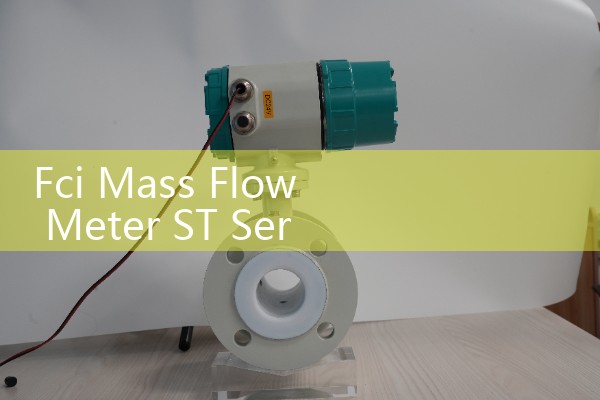
Last year a customer in Vietnam asked us for a flare gas flow meter on a 12 inch line. They originally requested a DN100 inline meter. After checking the purge flow and the maximum relief flow, we proposed a DN80 inline thermal meter with a reduced bore. It kept the low flow reading stable and still handled the normal upset range. The plant engineer found the selection report useful for their safety case documentation.
Quick sizing rules for flare gas thermal meters
First check the normal minimum flow. Then check the maximum flow you need to report, not the theoretical pipe capacity. Keep gas velocity at operating conditions between 0.3 m/s and 60 m/s for insertion probes depending on gas density. For inline thermal meters, stay within the calibrated mass velocity range. Ask for wet gas and liquid droplet conditions. Flare gas often carries moisture, and liquid droplets can affect thermal sensors.
For a thermal mass flow meter quotation, contact Silver Automation Instruments. Tel: +86-25-68650347. Whatsapp: +86-25-52155837. WeChat: +86 15365082610. Website: flow-meter.com.au.
Frequently Asked Questions
What data is needed to size a thermal mass flow meter for flare gas?
You need gas composition, minimum and maximum flow rate in kg/h, pressure in bar, temperature in °C, pipe size and schedule, and hazardous area classification. With these values we can calculate velocity and turndown.
Can one thermal flow meter cover purge flow and emergency flare flow?
Usually not. A single meter with a 100 to 1 turndown cannot cover a 300 to 1 flare event range. You may need two meters or two ranges. We check the actual ratios before quoting.
What is the difference between insertion and inline thermal mass flow meters?
Insertion probes are inserted into large flare headers through a ball valve or compression fitting. Inline meters are mounted directly in the pipe. Inline meters suit smaller lines below DN200. Insertion meters suit larger lines and reduce pressure loss.
Does thermal dispersion measurement need pressure and temperature compensation?
No. Thermal dispersion meters measure mass flow directly. That is the main advantage for flare gas with changing composition and pressure. You still need to report the operating conditions for correct sensor power and calibration range.
Can Silver Instruments supply an alternative to FCI ST Series meters?
Yes. Silver Automation Instruments supplies thermal dispersion mass flow meters for industrial flare gas. We provide 4-20 mA HART output, ATEX Zone 1 or Zone 2 models, and direct sizing support. Send us your pipe size and flow range for a quotation.
Send your pressure in bar, temperature in °C, pipe size in DN, gas composition, and minimum and maximum flow rate to Silver Automation Instruments. Tel: +86-25-68650347. Whatsapp: +86-25-52155837. WeChat: +86 15365082610. Website: flow-meter.com.au.
 Hot News
 Related AD