

『Coriolis Mass Flow Meter Principle & Design』Related information(flow rotameter|digital flow meter|balo meter|hydraulic flow meter|volumetric meter|positive displacement meter|pitot tube flow meter|displacement meter|cfm meter|variable area flow meter|inline flow meter|differential pressure flow meter|calibrated flow meter|velocity meter|paddle wheel flow meter|oval gear flow meter|anemometer hvac|multiphase flow meter|doppler flow meter|thorpe tube flowmeter|heat flow meter)
Coriolis Mass Flow Meter Principle & Design
Quick Answer
Coriolis mass flow meters measure true mass flow by detecting the Coriolis force on vibrating measurement tubes. They ignore changes in fluid density, viscosity, temperature, or conductivity.
Accuracy stays within 0.1% to 0.2% of rate, which makes them the first choice for custody transfer, batching, and high-value chemical dosing. Silver Instruments supplies these meters from DN15 up to DN200, with materials that handle anything from liquefied natural gas to hot edible oil.
How the Coriolis Measuring Principle Works
A drive coil excites a pair of tubes at their natural resonance, usually between 80 and 110 Hz. Fluid enters the tubes and gets pushed sideways as the tubes vibrate.
Here is the thing: flowing mass generates an inertial force that twists the tubes slightly. Two electromagnetic pickoffs on the inlet and outlet side detect a tiny time shift. That delta-t, measured in microseconds, scales directly with mass flow. No density or temperature compensation is needed. It is a direct mass measurement.
In practice, a DN25 sensor vibrates with an amplitude less than 1 mm. The phase shift for 200 kg/h of water might be only 25 microseconds. The transmitter digitises the signals, applies a fast Fourier transform, and computes mass flow, density, and temperature. A built-in PT100 sensor tracks tube temperature to cancel thermal expansion errors.
Single Tube vs. Dual Tube Design
Most industrial Coriolis meters use dual tube designs. Two parallel tubes vibrate in opposition, which cancels external noise from pumps or pipeline hammering. Silver Instruments standard SIL-COR series uses a balanced dual tube U-shape or delta-shape for sizes DN15 through DN150. This layout gives stable zero points and 0.1% accuracy even in heavy-vibration areas like offshore gas platforms.
Single straight tube meters exist for specific needs. They have lower pressure drop and handle high-viscosity fluids above 5000 cP without plugging. But they demand rigid supports and careful installation. We have seen a paint manufacturer in Vietnam switch from a dual tube to a single tube straight-path meter for a resin line flowing at 1200 cP and 60 degrees Celsius. The single tube avoided dead spaces where resin could cure. For most clean chemical and food flows, a dual tube unit remains the cost-effective choice.
Wet Part Materials and Industry Fit
The measuring tubes contact the process fluid directly. Silver Instruments offers 316L stainless steel as standard, ideal for water, edible oils, and diesel. Hastelloy C22 covers aggressive acids and caustic soda. Tantalum tubes serve concentrated sulfuric acid at 98%. For a desalination plant in Oman, we supplied a DN50 super duplex tube meter that handles seawater with a chloride content of 19000 mg/L. Material choice drives cost and lifetime, so we recommend sending your medium and concentration.
Signal Output and Transmitter Integration
The transmitter is not just a converter. It is a small flow computer. The SIL-COR transmitter outputs 4 to 20 mA HART, Modbus RTU, and a scalable pulse for batching. You can read mass flow in kg/h, density in g/cm3, and temperature in degrees Celsius simultaneously. A backlit LCD shows two lines, and the menu lets you set low-flow cut-offs in seconds.
Because many sites still use paper tracers, Silver Instruments transmitters can push data to our paperless recorder line. One cable via RS485 and you log custody
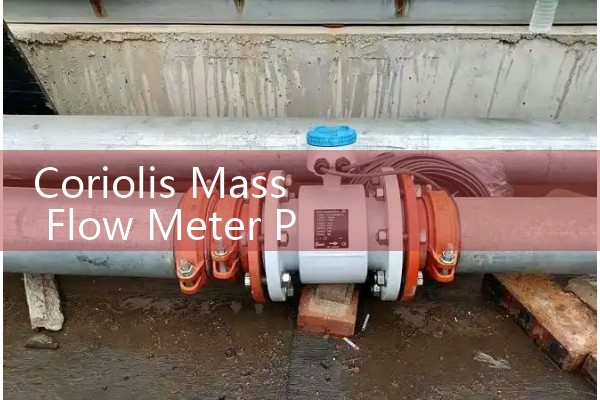
Installation Details Engineers Often Overlook
Most engineers skip this part until a batch filling goes wrong. Gas bubbles inside the vibrating tubes ruin accuracy because they dampen oscillation unpredictably. A paint manufacturer in Vietnam complained that his DN25 meter showed errors up to 3% on a solvent-based coating line. Flow was 200 kg/h at 800 cP and 45 degrees Celsius. The pump was drawing air at tank level low point. Installing a simple bubble trap and a back-pressure valve pushed accuracy back to 0.15%. We now ask customers about tank designs and pump types before final sizing.
Another common trap is thermal shock. If you send 80-degree-Celsius caustic through a cold tube in seconds, the zero point shifts and you lose a batch. Let the meter soak at process temperature for 20 minutes, then run a wet zero calibration. We ship every SIL-COR meter pre-zeroed on water, but a field zero with your process fluid always improves low-end accuracy. Also, install shut-off valves and a bypass loop. Coriolis tubes cannot be drained easily in vertical lines, and maintenance becomes a fight without a bypass.
Get a Quote for Your Exact Process
Send us your medium name, flow range (kg/h or t/h), operating pressure (bar), operating temperature (degrees Celsius), pipe size (DN), and viscosity (cP) if known. We check the material compatibility, pressure drop, and measurement span. Then we return a fixed price for the SIL-COR meter plus transmitter, freight to your port, and lead time. Typical reply time is within one business day. Reach our application team at [email protected] or request a call back through flow-meter.com.au. We ship across Southeast Asia, the Middle East, Africa, and Latin America with local support partners.
FAQ
Can a Coriolis flow meter measure gas?
Yes. Silver Instruments offers a dedicated gas Coriolis series for mass flow up to 500 kg/h with 0.5% accuracy. For larger gas lines, we recommend a dual tube design with higher drive gain and 316L wetted parts. Send us your gas composition and pressure.
What is the typical pressure drop?
For a DN25 dual tube meter flowing water at 4 m/s, pressure drop sits around 0.3 to 1.0 bar. Viscous fluid like heavy fuel oil at 300 cP increases this. We calculate pressure drop precisely when you share your viscosity in centipoise and desired flow range.
How do I perform a zero calibration?
Fill the sensor with process fluid under normal pressure and temperature, isolate it with valves, and ensure zero flow. Then start the zero function from the transmitter keypad or HART communicator. We advise a wet zero during commissioning and after any major temperature shift.
Can the meter handle pulsing flow from a diaphragm pump?
Adaptive digital filtering inside the SIL-COR transmitter reduces signal noise. But a pulsation dampener upstream is still a wise investment. A customer in a Malaysian biodiesel plant reduced mass flow fluctuation from 0.4% to 0.08% by adding a simple air-charged dampener.
Do you certify for hazardous areas?
Yes. The SIL-COR series holds ATEX Zone 1 (gas) and IECEx certifications. We also supply non-incendive versions for Class I Division 2. Inform us of your required zone, gas group, and temperature class, and we ship the correct marking.
 Hot News
 Related AD