

『Communication flowmeter』Related information(flow rotameter|digital flow meter|balo meter|hydraulic flow meter|volumetric meter|positive displacement meter|pitot tube flow meter|displacement meter|cfm meter|variable area flow meter|inline flow meter|differential pressure flow meter|calibrated flow meter|velocity meter|paddle wheel flow meter|oval gear flow meter|anemometer hvac|multiphase flow meter|doppler flow meter|thorpe tube flowmeter|heat flow meter)

What are the communication methods for multiphase flow meters? There are various communication methods for multiphase flow meters, including the following: RS485 communication: RS485 is a commonly used serial communication interface suitable for communication between devices in industrial environments. Multiphase flow meters often transmit data to upper computers or other devices through RS485 interfaces, support communication protocols such as Modbus, and have advantages such as long transmission distance and strong anti-interference ability. HART communication: HART is a communication protocol that overlays digital signals on top of 4-20mA analog signals and is widely used in intelligent flow meters. Multiphase flow meters can communicate with the upper computer through the HART protocol, transmitting flow data, diagnostic information, etc. Ethernet communication: With the development of industrial automation, the application of Ethernet communication in flow meters is becoming increasingly widespread. Multiphase flowmeter can be connected to the upper computer or network through Ethernet interface, supporting TCP/IP and other protocols to achieve high-speed and long-distance data transmission. Wireless communication: In certain application scenarios, such as remote monitoring, mobile devices, etc., multiphase flow meters can use wireless communication methods, such as GPRS, LoRa, etc., to achieve wireless transmission of data. Fieldbus communication: Fieldbus protocols such as Profibus and CANopen are also commonly used for communication in multiphase flow meters. These protocols support real-time communication between multiple devices and are suitable for complex industrial automation systems. 2. Siemens 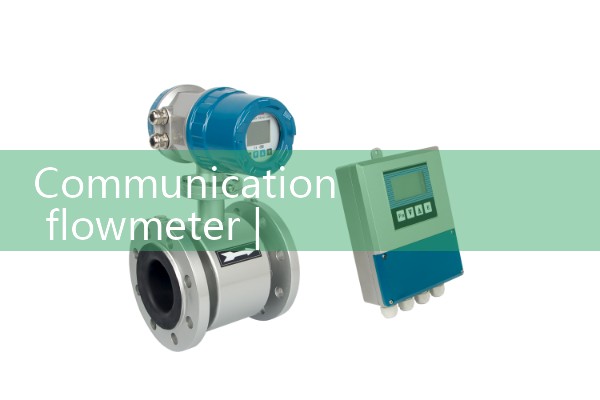
Siemens S7-200 PLC uses RS485 communication to read the hexadecimal number of the flowmeter and convert it to decimal. This requires a combination of communication protocol, data format, and PLC programming steps. The key is to clarify the data structure and process it through instructions.
.1. Communication Fundamentals and Data Format 1) In terms of communication protocol, the S7-200 usually communicates with the flowmeter through Freeport or Modbus protocol. It is necessary to confirm the protocol supported by the flowmeter, such as Modbus RTU, which is a common hexadecimal communication format.
. 2) In terms of data type, the hexadecimal numbers returned by flow meters are mostly 16 bit integers (such as 000 to FFFF) or 32-bit floating-point numbers, with clear data bit numbers (single/double) and byte order (high byte first/low byte first).2. Core steps for converting hexadecimal to decimal: 1) Single character (16 bit) conversion. Assuming the hexadecimal number 0x1234 (4660) is read, use the MOV instruction to store the hexadecimal number in the data register (such as VW100), and directly read the decimal value of VW100, because the S7-200 register is stored in decimal by default. After storing the hexadecimal number 0x1234, the decimal value of VW100 is 4660.
. 2) Double word (32-bit) conversion, assuming a double word hexadecimal number 0x (0) is read, use the MOV instruction to store the low word in VW1000 and the high word in VW1002 (or directly store in VD1000), read the decimal value of VD1000, and if it is a floating-point number (such as IEEE754 format of Modbus protocol), use Hot News
 Related AD