

『Mig Welding Gas Flow Meter: Optimizing Torch Gas CFM Delivery』Related information(flow rotameter|digital flow meter|balo meter|hydraulic flow meter|volumetric meter|positive displacement meter|pitot tube flow meter|displacement meter|cfm meter|variable area flow meter|inline flow meter|differential pressure flow meter|calibrated flow meter|velocity meter|paddle wheel flow meter|oval gear flow meter|anemometer hvac|multiphase flow meter|doppler flow meter|thorpe tube flowmeter|heat flow meter)
Mig Welding Gas Flow Meter: Optimizing Torch Gas CFM Delivery
Quick Answer: Controlling shielding gas flow precisely at the MIG torch reduces porosity, saves expensive argon or mixed gas, and stabilizes your weld puddle. A thermal mass flow meter gives you direct mass flow reading in CFM or L/min, unaffected by temperature and pressure changes that fool variable area meters.
Why Welders Upgrade from a Purge Rotameter
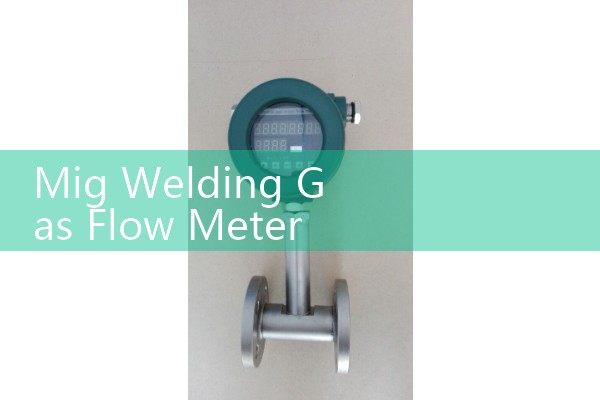
A standard ball-type gas flow meter, often called a rotameter, reads volumetric flow at low pressure. In practice, hose back-pressure and ambient heat change the actual gas density. A fabrication shop in Vietnam saw 15% variation in argon flow between morning and midday. We supplied a SIL-TMF025 thermal mass flow meter for their 3/8 inch stainless gas line. The meter now outputs a steady 4-20 mA signal to their PLC, and the weld porosity rate dropped to zero. The reading is in NL/min, easily converted to CFM (divide by 28.3). No more guessing.
Gas Flow Unit Conversion: Understanding CFM, L/min and SCFH
Most MIG welding procedure sheets specify shielding gas in CFH (cubic feet per hour). A common short circuit spray setting might call for 25 CFH, which equals 0.42 CFM or about 11.8 L/min. When you need a flow totalizer for gas billing or ISO documentation, you want standard cubic feet per minute (SCFM) referenced to 1 atm and 70°F. Our thermal mass flow meter computes SCFM directly using an internal PT100 temperature sensor and absolute pressure input. This matters a lot for mixed gas like Argon+20% CO2 used in automotive welding lines in Mexico.
Installing a Flow Meter Close to the Wire Feeder
Place the meter downstream of the regulator and as close to the wire feeder as possible. Long hoses cause pressure drop that changes flow. A thermal mass sensor needs 8 to 10 pipe diameters of straight run upstream and 4 to 5 downstream. For DN12 tubing, maintain a 120 mm straight section. We often see customers in Thailand and Indonesia mounting a compact in-line meter directly on the welding machine cart. It powers from 24 VDC and gives a local digital display of CFM and totalized cubic feet.
Silver Automation Instruments Gas Flow Meter Models for MIG Applications
We stock insertion and in-line thermal mass flow meters for pipe sizes DN10 to DN
Here is a real example. A pressure vessel manufacturer in Bahrain used three 80-liter argon cylinders per shift before metering. After installing a SIL-TMF020 per welding station, the monthly gas bill dropped 22%. The return on investment was less than 4 months. The engineering manager told us he gained a clear view of consumption per shift and could balance the gas manifold.
Get a precise quote for your welding gas setup. Send your gas composition, operating pressure (bar), temperature (°C), pipe OD or DN, and min/max flow rate in L/min or CFM. Contact Silver Automation Instruments: Email [email protected], Tel +86-135-1213-1526, WhatsApp 86-135-12131526, WeChat +86 13512131526. We ship to Southeast Asia, Middle East, Africa, and Latin America with full HS code support.
FAQ
Q: What is the typical argon flow rate for MIG welding mild steel?
A: Short circuit transfer typically uses 15-20 CFH (0.25-0.33 CFM). Spray arc transfer may demand 35-45 CFH.
Q: Can I use a liquid flow meter for welding gas?
A: No. Liquid flow meters disrupt gas flow and lack low-flow sensitivity. Use a dedicated gas thermal mass meter.
Q: How does a thermal mass flow meter compensate for temperature?
A: It has two RTD sensors in the gas stream. One measures gas temperature, the other measures heat dissipation. This cancels out temperature effects and gives true mass flow.
Q: What pipe size do I need for my welding gas line?
A: Common MIG stations use 1/4 inch or 3/8 inch OD tubing. Match the meter connection. We offer NPT, BSPT, and compression fittings.
Q: How can I get a price for a MIG gas flow meter from Silver Instruments?
A: Email [email protected] with your gas type, pressure, and DN size. We provide ex-works and air freight prices within 24 hours.
 Hot Blog
 Related AD