

 Current position >About Us
Thermal Mass Flow Meters: Direct Precision Gas Measurement Systems without Temperature Compensation
Quick Answer: A thermal mass flow meter from Silver Instruments measures gas mass flow directly in kg/h or Nm3/h. It uses two RTD sensors and a heat transfer principle, so no temperature or pressure compensation is needed. Send your gas type, pressure in bar, temperature in Celsius, pipe size in DN, and flow range for a quote.
Most gas flow instruments need extra transmitters and a flow computer. You measure volume flow first. Then you correct for pressure and temperature. A thermal mass flow meter skips that step. It reads gas mass flow at the sensor.
Silver Instruments supplies these meters for compressed air, natural gas, biogas, oxygen, nitrogen, carbon dioxide, and mixed gas lines. The technology works well in oil and gas, chemical, food and beverage, water and wastewater, and marine systems.
How Thermal Mass Flow Meters Work
Two platinum RTD sensors sit in the gas stream. One RTD is heated. The other RTD measures gas temperature. Moving gas removes heat from the heated sensor. More mass flow creates more cooling. The electronics measure the temperature difference between the two RTDs. That difference is proportional to gas mass flow.
This is a direct measurement method. The meter does not need separate pressure or temperature transmitters. The sensor uses a PT100 reference element and a heated element. The output can be 4 to 20 mA HART, RS485 Modbus, or pulse.
Why You Can Skip Temperature Compensation
A volumetric flow meter only measures actual volume. When gas temperature changes, the actual volume changes even if the mass of gas stays the same. An orifice plate or turbine meter cannot correct for this by itself. You need a pressure transmitter, a temperature transmitter, and a flow computer. That adds cost, wiring, and failure points.
A thermal mass flow meter measures the cooling effect of gas molecules directly. That effect depends on how many gas molecules hit the heated sensor. That number relates to mass flow, not volume flow. So the meter reports mass flow or standard volume flow without separate compensation.
In practice, this simplifies a biogas line or a compressed air header. The meter sends one signal to the PLC or control system. No extra math is needed.
Common Gas Applications
A paint manufacturer in Indonesia uses a Silver Instruments insertion thermal mass flow meter on a DN100 compressed air header. The meter sends 4 to 20 mA HART to the plant control system. They allocate compressed air cost by spray booth and packaging line.
Natural gas and biogas systems use thermal mass flow meters for burner control and engine consumption. A gas distributor in Latin America measures natural gas flow to a boiler house. The meter handles pipe sizes from DN50 to DN200. It reports standard flow in Nm3/h.
Water and wastewater plants use thermal mass flow meters for aeration air. A desalination plant in the Middle East measures air to dissolved air flotation units. The gas temperature is around 35 to 45 Celsius. The operating pressure is under 2 bar. No compensation devices are needed.
Food and beverage plants use the same technology for carbon dioxide and nitrogen blanketing. Chemical plants use it for inert gas and pilot gas lines.
Key Specifications for Silver Instruments Thermal Mass Flow Meters
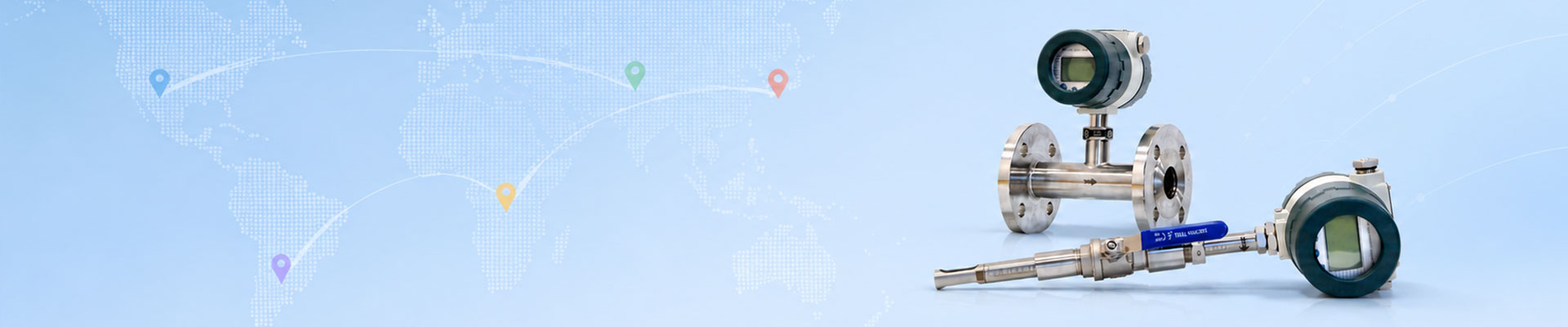
Silver Instruments offers two thermal mass flow meter styles. TMF-I is an insertion meter for DN80 to DN300 pipes. TMF-S is an inline meter for DN15 to DN50 lines. Both use 316L stainless steel wetted parts. The standard process temperature range is -40 Celsius to 200 Celsius. The standard pressure rating is 16 bar. Higher pressure options go to 40 bar.
Accuracy for the inline TMF-S is plus or minus 1.0 percent of rea